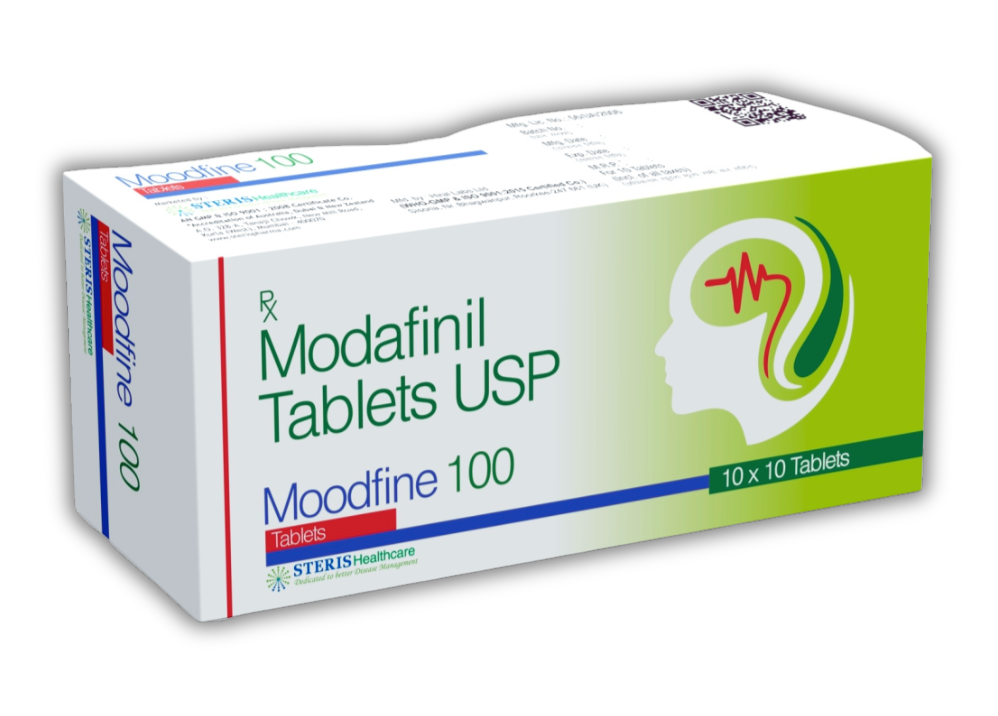
Description
Modafinil has caught a lot of attention for its ability to boost wakefulness and sharpen cognitive performance. It was first approved for narcolepsy, obstructive sleep apnoea, and shift-work sleep disorder.
Since then, researchers have looked into its wider effects on the brain and body. Recent research shows that modafinil not only enhances alertness but may also influence inflammation, mood regulation, and cognitive flexibility.
Scientists call modafinil a unique central nervous system stimulant. It acts on several neurotransmitter systems, mainly by inhibiting dopamine and norepinephrine transporters.
Unlike traditional stimulants, it usually causes fewer side effects and has a lower risk for dependence. Newer studies are exploring its anti-inflammatory properties and possible roles in conditions like liver disease, atherosclerosis, and neuropathic pain.
Key Takeaways
- Modafinil promotes wakefulness through its action on multiple neurotransmitter systems.
- Research supports its potential for cognitive enhancement and new therapeutic uses.
- Ongoing studies examine its safety, long-term effects, and emerging medical roles.
Pharmacology and Mechanism of Action
Modafinil acts as a wakefulness-promoting psychostimulant that affects several neurotransmitter systems in the central nervous system (CNS). It changes the activity of dopamine, norepinephrine, serotonin, and histamine pathways.
It also influences cortical and hypothalamic regions involved in arousal and attention regulation.
Pharmacokinetic Profile
After you take modafinil by mouth, it shows high oral bioavailability, usually over 80%. Peak plasma concentration happens within 2–4 hours, and the average half-life is about 10 to 15 hours, so once-daily dosing works for most people.
Food doesn’t really affect absorption, though a high-fat meal might slow down the onset. The liver handles most of the metabolism, mainly through cytochrome P450 isoenzymes (CYP3A4 and CYP2C19).
Its metabolites, like modafinil acid, don’t have pharmacological activity and get excreted mostly in urine. The compound comes in two enantiomers—R- and S-modafinil.
The R-isomer sticks around longer and contributes more to the drug’s sustained effects. After a few days of regular dosing, you usually reach steady-state concentrations.
There’s minimal accumulation thanks to efficient hepatic clearance.
Neurochemical Activity and Pathways
Modafinil’s mechanism stands apart from classical stimulants, though it still taps into dopaminergic and adrenergic circuits. It weakly inhibits the dopamine transporter (DAT), which reduces dopamine reuptake in regions like the prefrontal cortex and nucleus accumbens.
This action increases synaptic dopamine levels. It also boosts norepinephrine and serotonin transmission in cortical areas and ramps up histamine release in the hypothalamus, supporting wakefulness.
Studies have found modulation of GABAergic pathways, with decreased GABA levels in several brain regions. This leads to more cortical excitability.
Unlike amphetamines, modafinil doesn’t trigger large-scale monoamine release. Instead, it works through selective modulation of neurotransmission and hypothalamic activation of orexin neurons.
This helps stabilize wake–sleep balance with fewer peripheral sympathomimetic effects.
Comparison With Other Stimulants
Modafinil isn’t quite like amphetamine-type stimulants or methylphenidate. It produces arousal and cognitive enhancement mainly through DAT inhibition and orexin activation, not by directly releasing dopamine or norepinephrine.
| Feature | Modafinil | Amphetamine |
|---|---|---|
| Primary action | Weak DAT inhibition | Monoamine release via reverse transport |
| Half-life | 10–15 h | 8–12 h |
| GABA effect | Decrease in cortical inhibition | Variable |
| Rebound sleep | Minimal | Common |
| Abuse potential | Low to moderate | High |
Because it doesn’t cause strong euphoria or withdrawal, modafinil maintains a distinct psychopharmacological profile. This supports its role as a clinical wakefulness-promoting agent rather than a typical stimulant.
Therapeutic Applications and Clinical Evidence
Modafinil consistently reduces pathological sleepiness in several disorders. Randomised controlled trials (RCTs) show clear improvements in alertness, cognitive performance, and daily function, without the high abuse potential of classic stimulants.
Evidence for use outside of approved sleep disorders is mixed and varies by condition and study design.
Narcolepsy and Excessive Daytime Sleepiness
Modafinil is a well-established treatment for narcolepsy, a chronic disorder marked by uncontrollable daytime sleep episodes. In multiple RCTs, daily doses of 200–400 mg improved wakefulness, reduced sleep latency, and gave people a better sense of vitality compared to placebo.
Unlike older stimulants like amphetamine, modafinil works through selective activation of hypothalamic and cortical regions involved in arousal. Trials show continued efficacy over months with limited tolerance development.
However, modafinil doesn’t address cataplexy, so patients often need combination therapy. Headache, nausea, and mild insomnia are the most common side effects, usually depending on the dose.
Despite these, dropout rates in studies are low, which speaks to its long-term tolerability.
Obstructive Sleep Apnoea and Shift Work Sleep Disorder
For people with obstructive sleep apnoea who still feel sleepy despite optimal CPAP therapy, modafinil helps improve both objective and subjective wakefulness. Large phase III trials show significant improvements in Maintenance of Wakefulness Test scores and Epworth Sleepiness Scale ratings.
It’s important to keep using CPAP, since modafinil only eases symptoms and doesn’t treat the airway obstruction itself. In shift work sleep disorder, taking modafinil before a shift can enhance performance, alertness, and reaction time during night work.
These benefits have been confirmed in placebo-controlled RCTs. Some people report delayed sleep onset or nervousness, but serious side effects are rare when doctors supervise use.
Use in Cognitive Impairment and Psychiatric Conditions
Studies in ADHD suggest modafinil improves attention and executive function, performing similarly to methylphenidate in small trials. Still, it lacks regulatory approval for ADHD due to safety concerns, especially skin reactions in children.
Research in schizophrenia, bipolar disorder, and major depressive disorder shows mild improvements in fatigue and cognitive performance, but results are inconsistent.
In bipolar depression, adding modafinil to mood stabilisers has improved depressive symptoms without triggering mania in carefully selected patients. Controlled trials in schizophrenia show little extra benefit once psychotropic regimens are optimized.
Most psychiatric studies are small and short-term, so it’s hard to draw firm conclusions.
Fatigue and Other Neurological Disorders
Researchers have explored modafinil’s wake-promoting and cognitive-enhancing effects in disorders with central fatigue, like multiple sclerosis (MS), traumatic brain injury (TBI), and myotonic dystrophy. Some MS studies report significant improvement in perceived fatigue, while others see no difference from placebo.
In TBI, initial gains in alertness often don’t lead to better neuropsychological outcomes or less long-term fatigue. Evidence for Parkinson’s disease, chronic fatigue syndrome, and post-polio fatigue is inconclusive, with studies often small and varied.
Modafinil shows promise as a symptom-targeted therapy, though it’s not a disease-modifying drug. Larger RCTs and longer follow-up are needed to clarify its place in these neurological conditions.
Cognitive Enhancement and Performance Augmentation
Researchers have zeroed in on modafinil’s ability to boost working memory, attention, and alertness, especially in people who are tired or sleep deprived. The effects are measurable but not huge, and they really depend on the person, the dose, and the situation.
Evidence for Cognition and Alertness in Healthy Individuals
Clinical and experimental studies suggest modafinil can modestly enhance certain aspects of cognition in healthy adults. Controlled trials often find improvements in executive function, sustained attention, and memory updating.
A 2020 meta-analysis found small but statistically significant effects, especially for memory and inhibitory control tasks. These changes hint at better information processing and attentional stability, but not a jump in overall intelligence.
Unlike caffeine or other stimulants, modafinil mainly acts on dopamine and orexin systems. It keeps you alert for longer stretches, helping maintain reaction time and logical reasoning under fatigue.
However, these benefits are domain-specific and dose-dependent. Higher doses don’t necessarily mean better results, and side effects like insomnia, headache, or anxiety are usually mild.
We still don’t fully understand long-term changes in cognition or mood, so there’s a need for more long-term research.
Non-Medical Use and Motivations
Non-medical use among students and professionals has climbed because people hope for better productivity and concentration. Many compare modafinil to other cognitive-enhancing drugs like methylphenidate or amphetamine but prefer its lower risk of dependency.
People cite pressure for academic achievement, competitive work environments, and a wish to manage fatigue better than with energy drinks or caffeine pills. Easy access through online pharmacies has also fueled the trend, often without medical guidance.
While users often report feeling more alert, objective studies show inconsistent cognitive improvements when people aren’t sleep deprived. The ethical debate continues around fairness, pressure to perform, and the blurry line between treatment and enhancement.
Regulators still struggle with how to handle this grey zone, especially as modafinil use spreads beyond clinics and into everyday life.
Performance in Military and High-Demand Settings
Armed forces and emergency responders have looked at modafinil as a pharmaceutical neuroprotective enhancement tool. They want to keep people alert during long operations.
Military research shows modafinil can help maintain vigilance, working memory, and coordination when sleep is limited for over 24 hours. It often matches or outperforms caffeine, and rebound effects seem less intense.
Table 1 summarises comparisons of performance aids under sleep deprivation:
| Substance | Main Effect | Duration (hrs) | Common Drawbacks |
|---|---|---|---|
| Modafinil | Wakefulness, sustained attention | 10–15 | Mild insomnia, headache |
| Caffeine | Short-term alertness | 3–5 | Jitters, crash effect |
| Amphetamine | Focus, stamina | 8–12 | Dependency risk, anxiety |
Modafinil’s value for fatigue mitigation stands out in controlled, mission-critical conditions. But experts warn that using it too long without sleep can’t fully protect decision-making or emotional balance.
Safety, Side Effects, and Regulatory Status
Modafinil is widely used for sleep disorders and sometimes for off-label cognitive enhancement. Its safety record is generally good, but you can still run into mild or serious side effects, drug interactions, and legal restrictions because it’s a stimulant.
Adverse Effects and Contraindications
Common side effects include headache, insomnia, nausea, and anxiety. Some folks get dizzy or have a dry mouth.
Moderate skin rashes and allergic hypersensitivity reactions can happen, though they’re rare and sometimes serious enough to stop the drug. Severe conditions like Stevens–Johnson syndrome and toxic epidermal necrolysis are even rarer, but doctors usually recommend stopping modafinil if a rash shows up.
Contraindications include uncontrolled hypertension, heart arrhythmias, or allergies to modafinil or related drugs. People with psychiatric conditions should be careful, since modafinil can sometimes make anxiety or mania worse.
Pregnant or breastfeeding women should steer clear of modafinil because there’s not enough safety data and there may be a risk to the fetus. If you have renal or hepatic impairment, doctors usually lower the dose since your body clears the drug more slowly.
| Severity | Common Effects | Serious Effects |
|---|---|---|
| Mild to Moderate | Headache, nausea, insomnia | Anxiety, dizziness, diarrhoea |
| Rare but Serious | Rash, allergic reaction | Stevens–Johnson syndrome, toxic epidermal necrolysis |
Drug Interactions and Overdose Risk
Modafinil induces CYP3A4 and inhibits CYP2C19, which affects drugs like oral contraceptives, warfarin, and certain antidepressants. This can make birth control less effective and change how other meds work.
Doctors often suggest women on hormonal contraceptives use backup protection during and after modafinil.
Overdose isn’t common, but it happens. Signs include agitation, tachycardia, chest pain, confusion, and insomnia. Toxic doses vary, but emergency care focuses on protecting the airway and providing support.
Animal and human studies haven’t shown clear neurotoxic effects, though big doses do ramp up sympathetic activity. Compared to other prescription stimulants, modafinil seems to have less cardiovascular toxicity, but you still need proper dosing and supervision.
Abuse Potential and Legal Classification
Modafinil boosts wakefulness, but evidence points to a low abuse potential compared to amphetamines. It doesn’t usually trigger strong euphoria, cravings, or withdrawal, though some students and professionals have misused it for performance.
In the U.S., modafinil is a Schedule IV substance under the Controlled Substances Act. The UK regulates it similarly under the Misuse of Drugs Regulations. These rules acknowledge its medical value but recognize there’s still some risk of misuse or dependence.
Diagnostic manuals like the ICD and DSM include modafinil misuse under stimulant-related disorders if someone develops behavioral dependence. Good prescribing, patient follow-up, and education about drug abuse risks matter in both clinics and the wider world.
Detection, Toxicology, and Forensic Considerations
Accurate identification and measurement of modafinil and its metabolites matter for medical, legal, and investigative work. Reliable lab tools and strict quality standards help ensure results that hold up for clinical and forensic decisions.
Analytical Methods and Biological Monitoring
Labs usually detect modafinil with liquid chromatography (LC) and mass spectrometry (MS) because they’re precise and selective. Methods like UHPLC-QQQ-MS/MS and LC-MS/MS pick up modafinil in blood, urine, and oral fluid, even in complex samples.
Sample prep often uses protein precipitation or solid-phase extraction to clear out interfering stuff. Detection limits are low—down to nanograms per millilitre—so labs can find modafinil long after someone takes it.
Pharmacokinetic studies show the liver breaks modafinil down to modafinilic acid and modafinil sulfone. Both can show up in test samples. Table 1 lists typical biological samples and their detection windows.
| Biological Material | Common Detection Window | Analytical Method Used |
|---|---|---|
| Blood | Up to 24–36 hours | LC-MS/MS |
| Urine | Up to 3–5 days | UHPLC-QQQ-MS/MS |
| Hair | Weeks to months | LC-MS/MS |
Routine monitoring can confirm use or misuse. Accredited labs run proficiency tests to keep results accurate and consistent.
Forensic Toxicology and Post-Mortem Analysis
Forensic toxicologists check for modafinil in cases of impaired driving, suspicious deaths, or workplace safety incidents. Post-mortem tests might use blood, vitreous humour, liver, and urine to look for exposure and possible drug movement after death.
Fatal toxicity from modafinil is rare, so interpretation usually focuses on concentration, other drugs present, and medical findings. Drug movement after death can make results tricky, so labs compare samples from different sites.
Modern forensic labs use validated methods that meet international standards like ISO/IEC 17025. Results need to be clear, reproducible, and able to stand up in court.
Toxicology work also considers matrix effects and degradation, making sure identification and measurement stay reliable no matter how samples were stored. These steps help keep modafinil findings solid in both living and deceased cases.
Emerging Research and Future Perspectives
New research is digging into modafinil’s effects beyond just wakefulness. Scientists are looking at its impact on neuroinflammation, neurodegeneration, and even substance dependence.
Clinical trials are running to study long-term safety, its role in reducing addictive behaviors, and possible use as a supportive therapy in chronic illness. The field’s definitely moving fast.
Novel Uses and Ongoing Clinical Trials
Since 2023, new trials have begun testing modafinil in attention deficit disorders, treatment-resistant depression, and fatigue from chronic illness. Researchers are also comparing it to armodafinil and adrafinil to see how their effects and durations stack up.
Some teams now study modafinil in recovery from methamphetamine and cocaine addiction. Early results suggest it might help reduce cravings and relapse, possibly by stabilizing dopamine signaling.
Several Phase II trials are underway in Europe and the U.S. They’re measuring addiction outcomes over six to twelve months.
Combination therapies are another angle—using modafinil with behavioral or psychotherapeutic support to boost treatment adherence. Some peer-reviewed reports say these combined approaches can improve daytime function without causing dependence.
Neurodegenerative and Inflammatory Disorders
Evidence is building that modafinil affects neuroinflammatory activity and oxidative stress. Animal and early human studies show it may lower pro-inflammatory cytokines and support better mitochondrial function.
In diseases like Alzheimer’s and Parkinson’s, researchers are testing modafinil’s ability to improve attention and motor control by enhancing brain connectivity. There’s also interest in how it affects microglial activation, which may help slow neurodegeneration.
A small trial in 2024 found that Alzheimer’s patients on modafinil had better cognitive scores than those on placebo. The numbers are still small, but that’s promising for future neuroprotective strategies.
Ethical and Societal Considerations
Off-label use of modafinil brings up ethical questions around enhancement, fairness, and medical oversight. Some professionals worry about more students and shift workers using it for cognitive boosts without a doctor’s input.
Regulators keep an eye on the line between medical need and enhancement. Surveys in the UK and EU show growing interest in modafinil for productivity, so there’s more talk about responsible use and informed consent.
Clinicians stress the need for prescription monitoring, public education, and more long-term safety studies. As new uses emerge, ethical frameworks have to balance innovation with protecting health and ensuring fair access.
Frequently Asked Questions
Recent research on modafinil covers its unique neurochemical profile, cognitive effects, and safety for both medical and off-label use. Studies now look beyond sleep disorders, exploring psychiatry, neurorehabilitation, and addiction treatment.
What are the latest findings on the mechanism of action of Modafinil?
Recent studies show modafinil mainly works by blocking the dopamine transporter (DAT), which raises dopamine levels in areas like the striatum and nucleus accumbens. Unlike classic stimulants, it binds less tightly and kicks in more slowly, which might explain why it’s less addictive.
It also affects other neurotransmitters—glutamate, GABA, serotonin, and orexin. Imaging and electrophysiology suggest modafinil selectively activates brain networks for alertness and attention, but doesn’t strongly stimulate motor or reward circuits.
How does Modafinil affect cognitive performance in healthy individuals?
Meta-analyses and controlled trials show modest but real improvements in executive function, working memory, and reaction time. The benefits show up most during tasks that need sustained focus or when people are sleep-deprived.
Evidence is mixed across different studies, and results depend on dose, how long someone takes it, and their starting performance. Cognitive gains tend to stand out more during complex or long tasks, not so much for simple or repetitive ones.
What are the long‑term implications of Modafinil use on brain health?
Long‑term safety data? Still pretty limited, honestly. Most studies look at short or moderate treatment periods, usually less than a year.
So far, evidence points to minimal structural or neurotoxic effects when people use modafinil as prescribed. Researchers keep an eye on possible changes in dopaminergic and noradrenergic pathways with long-term use.
Animal studies hint at little to no tolerance, but we still don’t have solid proof in humans. That gap leaves a lot of open questions.
What have recent clinical trials revealed about the efficacy of Modafinil for treating sleep disorders?
Clinical trials keep backing modafinil for narcolepsy, obstructive sleep apnoea, and shift‑work sleep disorder. People on modafinil tend to feel more awake and less bogged down by daytime sleepiness compared to those on placebo.
Performance seems stable over months, and most folks don’t need higher doses or experience harsh withdrawal. The extended‑release R‑enantiomer, armodafinil, has similar effects—maybe a bit longer‑lasting, depending who you ask.
Are there any novel therapeutic applications of Modafinil being researched?
Researchers are now exploring modafinil for substance use disorders, cognitive problems in neurodegenerative diseases, and some mood disorders. Early data in people with cocaine or methamphetamine dependence shows less craving and better impulse control.
Other studies are trying modafinil as an add‑on in depression and schizophrenia, especially for fatigue and attention issues. Results look promising so far, but honestly, most of these studies are still pretty small and short-term.
What are the known side effects and potential risks associated with Modafinil?
The most common side effects? Headache, nausea, insomnia, and a bit of mild anxiety. Usually, these symptoms fade once you adjust the dose or stop taking it.
Serious reactions don’t happen often, but they can show up as skin rashes or hypersensitivity. Modafinil also ramps up certain cytochrome P450 enzymes, which means it might mess with hormonal contraceptives and some other meds.
If you’re using it long-term, it’s smart to check in with your doctor regularly.